
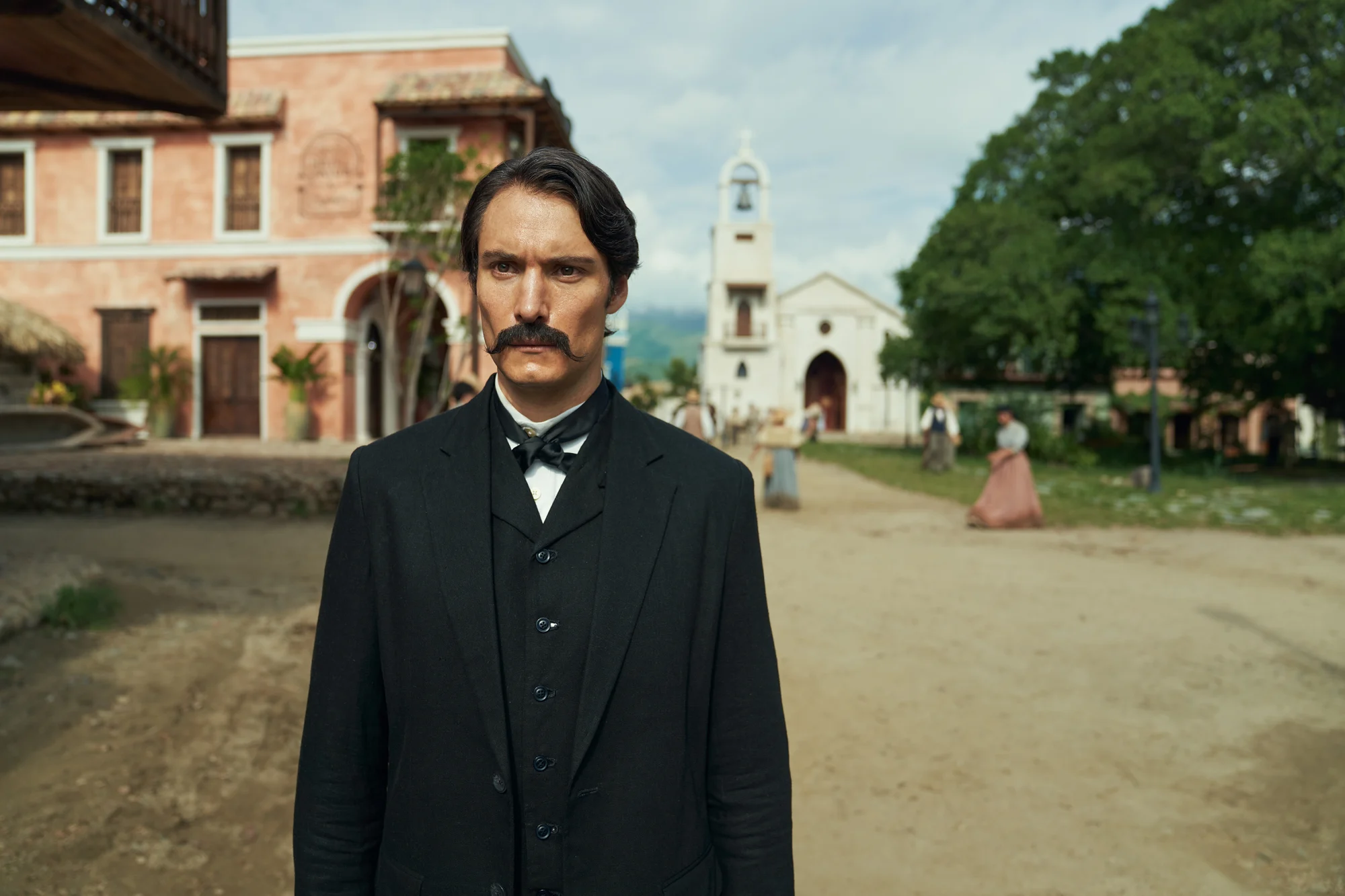
How do you bring to life one of the most beloved Latin American towns — one that has a century of history, but never existed at all?
That was the task facing the production team of “One Hundred Years of Solitude” (or “Cien Años de Soledad”), the long-awaited Netflix adaptation of a novel widely lauded as being among the 20th century’s greatest literary works. Written in 1967 by the Nobel Prize-winning Colombian author Gabriel García Márquez, the book follows seven generations of the Buendía family, who follow cyclical paths of obsession, yearning, idealism and detachment, and are tied inextricably to the fate of their home, Macondo.
From one of the first scenes, as Colonel Aureliano Buendía faces down a firing squad against a bloodied, white stucco wall on a clear day, viewers are transported into Macondo, an isolated riverside settlement that flourishes into a prosperous town before confronting war and colonialist exploitation.
As one of the most famous works in the magical realism genre, the book’s setting teems with the supernatural and the dreamlike, though they are treated as everyday occurrences. Early on, an insomnia plague sinks residents into a haze of short-term memory loss; later, a single trickle of blood turns corners, crosses streets and climbs curbs to alert the family matriarch, Úrsula, of a shocking death.
Before his death in 2014, García Márquez credited his storytelling style to that of his grandmother, who talked of fantastic things “with complete naturalness.”
“What was most important was the expression she had on her face,” he told The Paris Review in 1981. “In previous attempts to write ‘One Hundred Years of Solitude,’ I tried to tell the story without believing in it. I discovered that what I had to do was believe in them myself and write them with the same expression with which my grandmother told them: with a brick face.”
The meticulous building of Macondo
Macondo has never been found on any map — though it might have, had an ill-fated 2006 proposal to change the name of Marquez’s birthplace, Aracataca, succeeded — but it has lived in the minds of readers for decades. It is also steeped in real Colombian history. Because of that, the Netflix show, which will span two seasons and premieres on December 11, was filmed exclusively in the country and is entirely in Spanish. The show also has the blessing of the author’s family, with García Márquez’s sons, Rodrigo Garcia and Gonzalo Garcia Barcha, serving as executive producers.
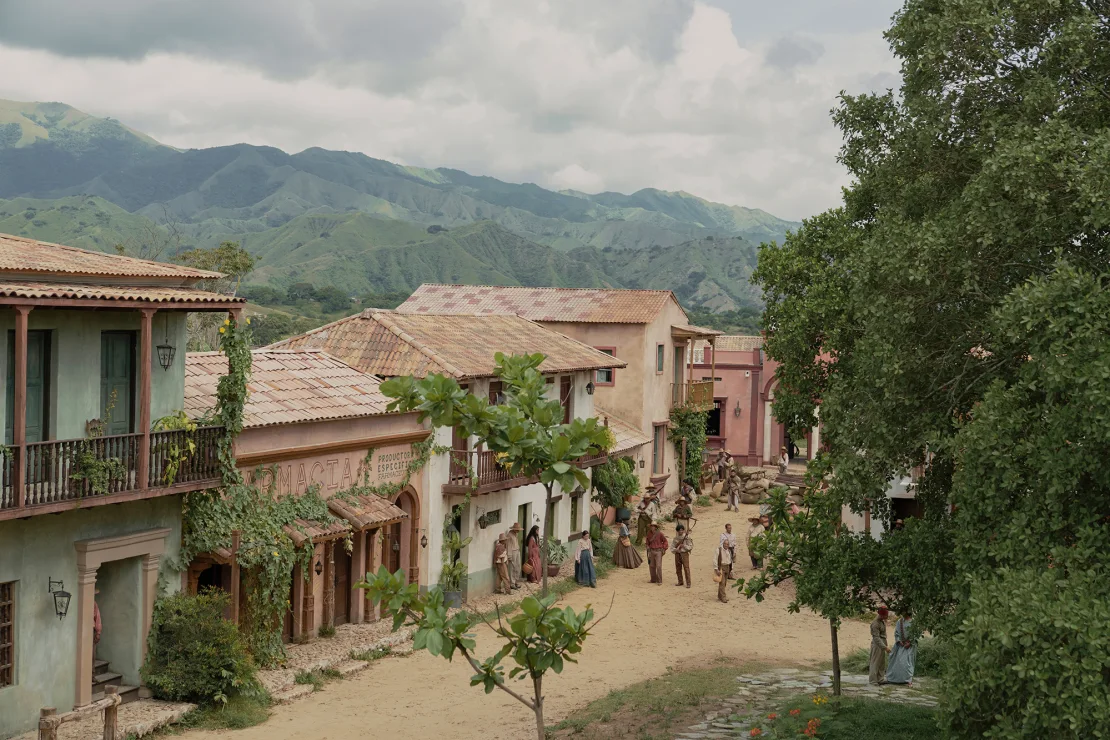
Production involved building meticulous town-sized sets and creating faithful costumes from the 1800s and 1900s. “‘One Hundred Years of Solitude’ occurs during a specific time in Colombian history,” said production designer Bárbara Enríquez in a translated video call with CNN. “We treated it as a period piece.”
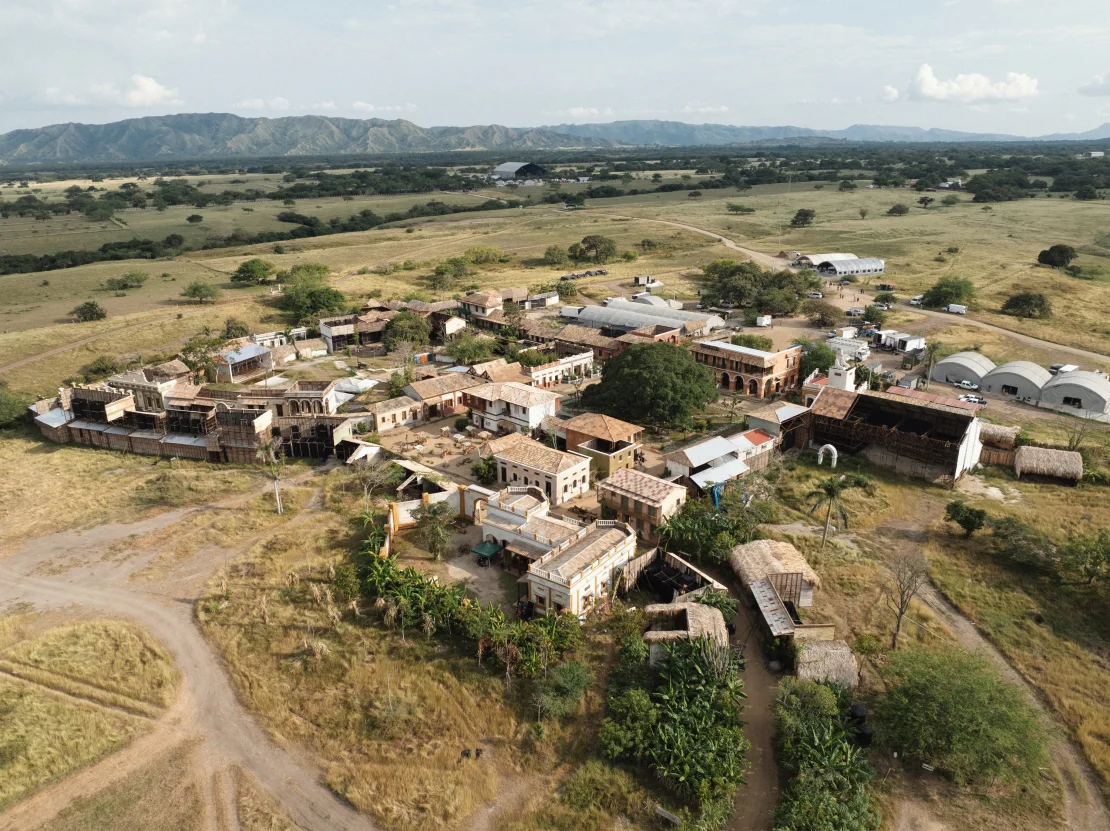
Enríquez took over production design in 2022, after Eugenio Caballero, best known for his Academy Award-winning “Pan’s Labyrinth” sets, stepped down from the project. (Caballero and Enríquez previously worked together on Alfonso Cuáron’s Academy Award-winning “Roma” in 2018). The production of “One Hundred Years of Solitude” is one of the largest in Latin American history, according to Netflix, and required the building of three different towns.
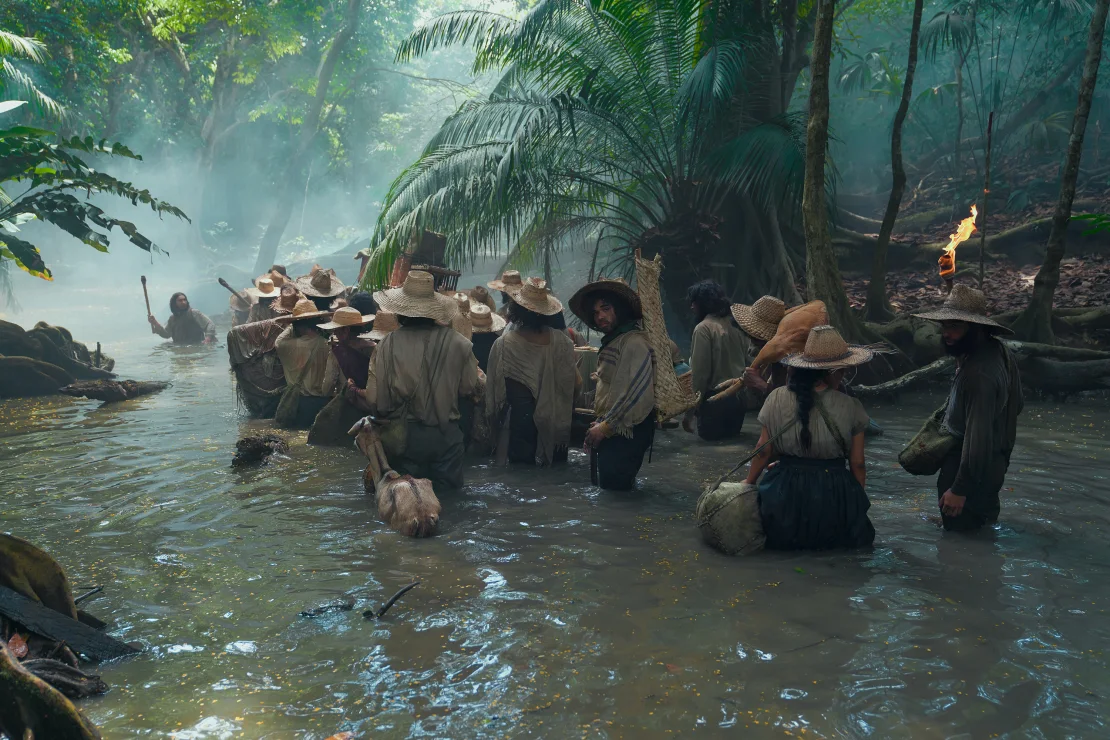
The first served as the unnamed village of mud huts and bamboo, where cousins José Arcadio Buendía and Úrsula Iguarán grow up and marry one another before leading part of their community on an exodus across mountain ranges and disorienting swamplands to establish Macondo. Then, there were two versions of Macondo itself: the simple thatched homes and dirt roads of its early years, followed by the verdant streets and elegant multi-story homes that develop as the town becomes increasingly connected with the outside world.
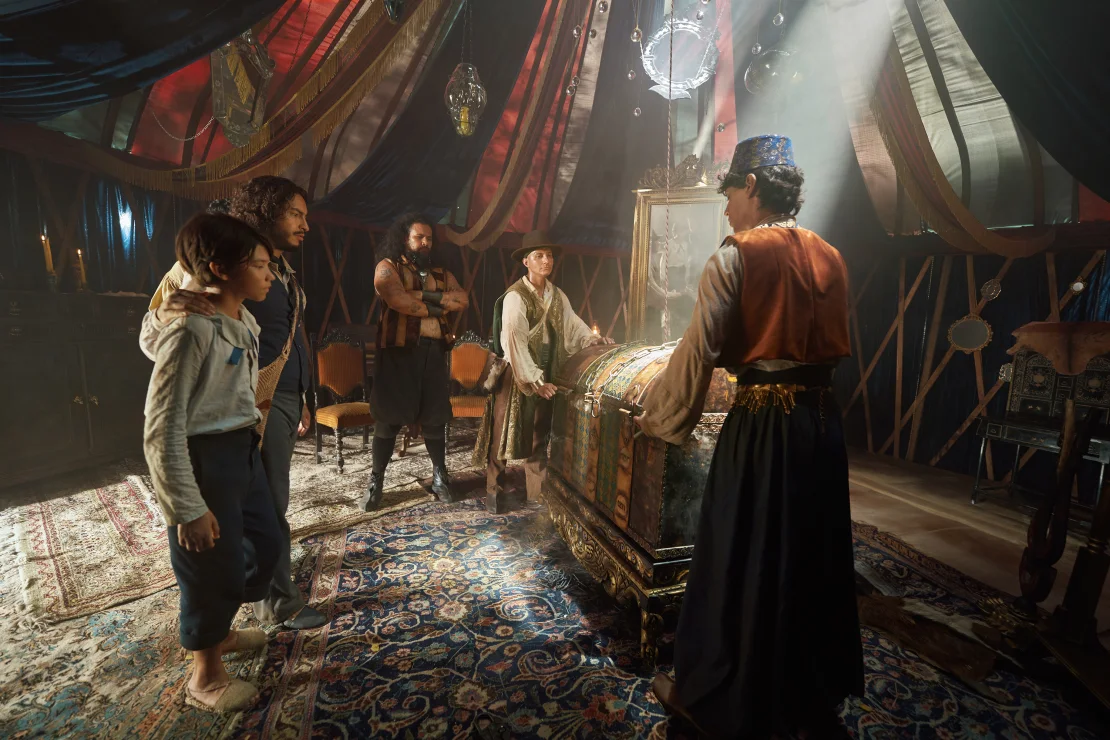
Magical realism is “actually just reality wherein magical things occur,” Enríquez said. “From the set design perspective, what we wanted to do was a very rigorous historical set, so that we could then insert the extraordinary parts within the ordinary.”
Then there’s the first block of ice ever seen in Macondo, brought in by traveling gypsies, that stays in Aureliano’s memories for the rest of his life. Presented like an enormous, glittering diamond in a gold chest, which erupts into fog when opened and casts a soft light onto José Arcadio and his two sons, the indelible ice was real.
“It was so important to have the authentic look and feel, and so that when (young Aureliano) touched the ice, the actor’s reaction was authentic,” recalled Enríquez.
How a house became a character
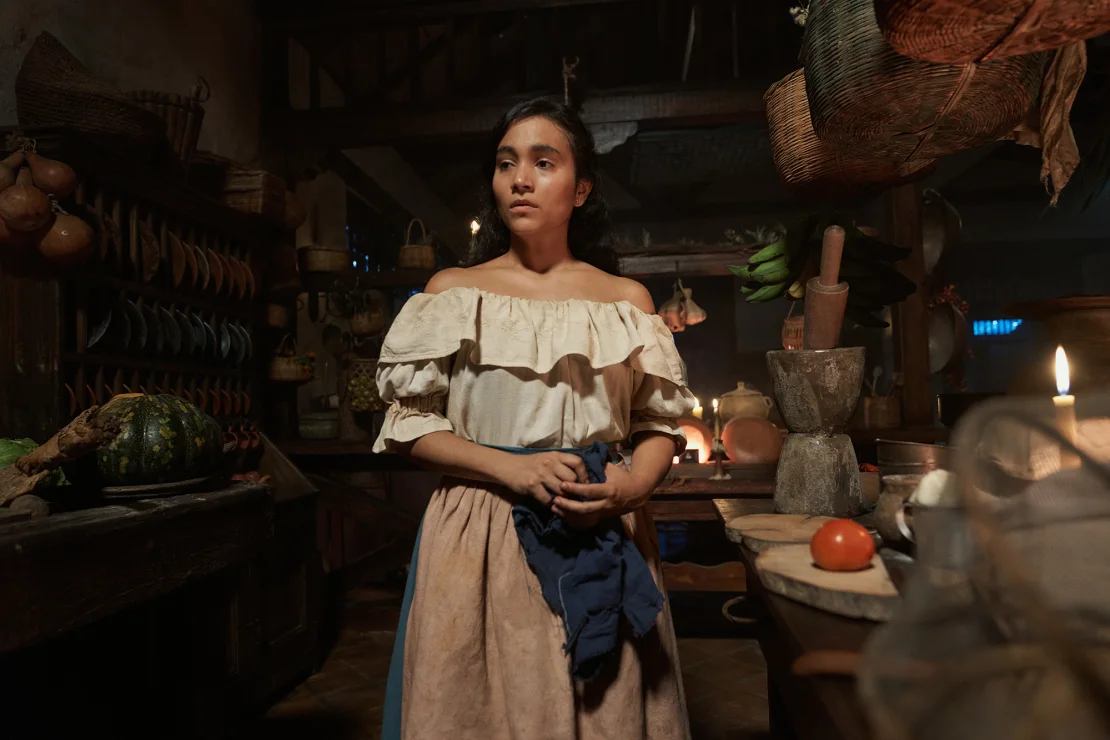
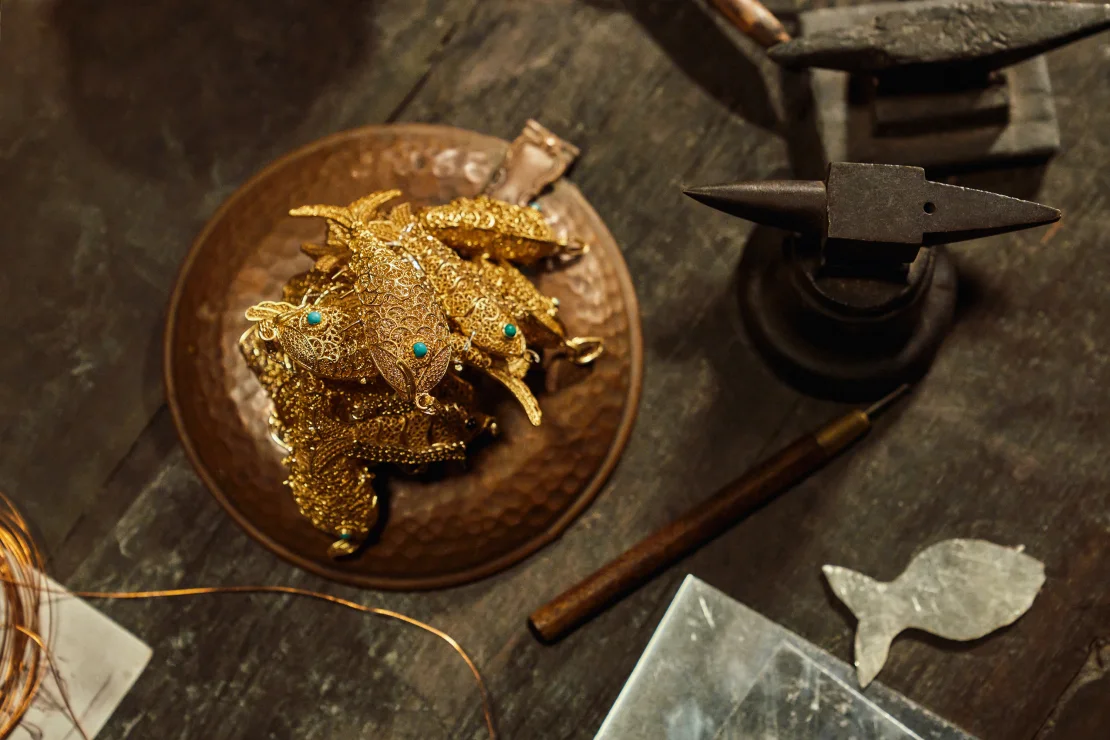
At the figurative center of the town is the Buendía household, ever expanding to accommodate the needs of its revolving members. Its bedrooms are filled with lovelorn characters coming of age and finding intimacy beneath their mosquito nets; its alchemic laboratory hosts the obsessive scientific experiments of patriarch José Arcadio and Melquíades. Then there’s Aureliano’s metal workshop for his meticulous crafting of gold fish, which were custom-made for the show. And, when the young girls Amaranta and Rebeca grow up, the Buendías’ parlor is transformed by music, as the Italian Pietro Crespi brings in a pianola and a delicate music box (also custom-made) that enraptures the household.
Fittingly, Enríquez and her team treat the house as a character in and of itself. “The house is just another Buendia,” she remarked — one that changes its mood as well.
“When Úrsula is happy, the house is happy. When Úrsula is depressed, the house looks depressed. When the town goes to war, the house goes to war,” Enríquez said.
In decorating the light-filled, airy abode, Enríquez’s team sourced an enormous trove of antique furniture. The producers also worked with Indigenous communities across Colombia, including artisans from the Zenú people, in Córdoba, who created woven baskets for the show, and the Chimila people, in Magdalena, who created traditional hammocks called chinchorros.
“We were able to use objects and materials that were not only true to the time period, but also true to the Indigenous people,” Enríquez said. “We also went all over the country looking for craftspeople who knew how to use the techniques.”
Like Enriquez, costume designer Catherine Rodriguez had a diligent method for visualizing Macondo, including researching Colombia’s national records and referencing watercolors from the period.
“I read many books about the author, the period and the fashion of the time,” she said in a translated video call with CNN. “There are many registers; there is much documented about the era.”
But the painstaking research only took her and her team so far. “At some point you have to sit down and develop everything. That’s where the creative part comes in. You have to choose colors, applications and textures, because there is no (authority) that says what Macondo looked like in the 19th or 20th century,” she explained. “It’s actually a compilation of many different elements, and the directors wanted it all to look very natural, because the book already has lots of magical elements.”
Transforming with time
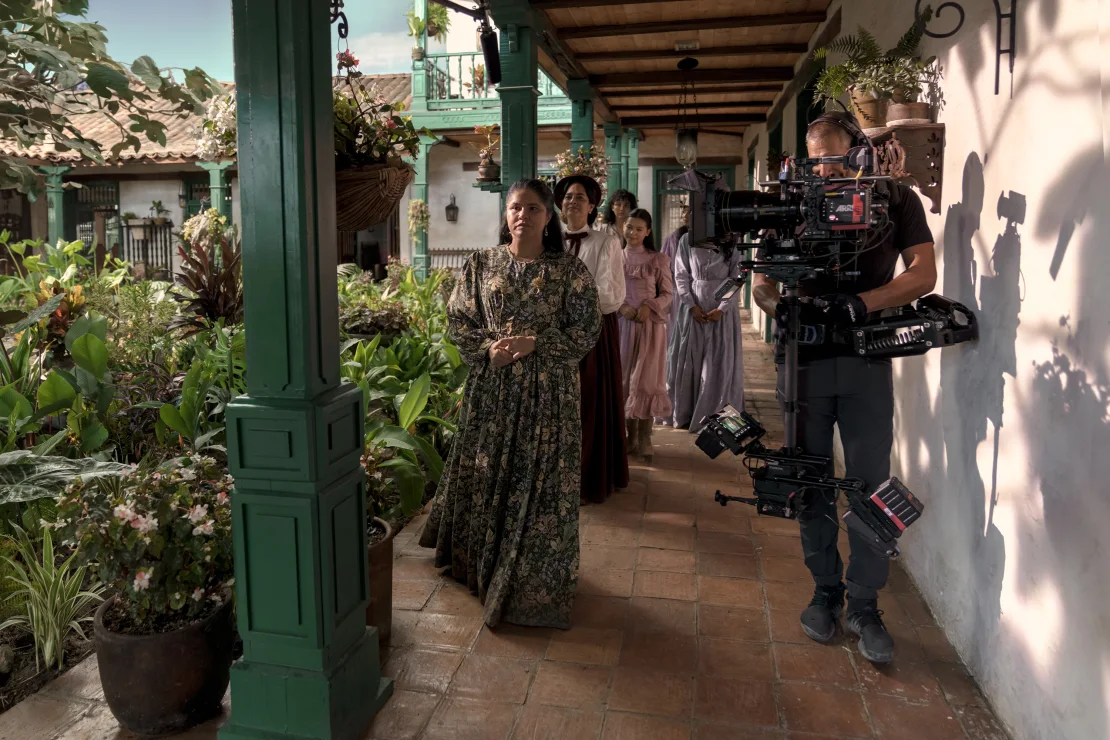
Over the course of the first few episodes, the earth-tone fabrics, practical leather boots and wide-brimmed straw hats worn by Macondo’s early settlers give way to a wider range of silhouettes, from delicate floral gowns to tailored men’s suiting. Visitors continually introduce new styles, such as the traveling gypsies’ colorful textiles, Crespi’s flamboyant embroidered silk from Italy, and the flower-adorned sun hats of the wealthy incoming magistrate’s family. (Speaking about one of Úrsula’s outfits, which has a direct connection to the styles of Civil War-era America, Rodriguez notes that fashion always arrives “a little bit later” due to the town’s isolation.)
Though Rodriguez said she doesn’t play favorites when it comes to the characters, she delighted in dressing Rebeca and Amaranta as they grew older — and became secret antagonists over their competing love interests. From the pale, girlish gowns of childhood, their wardrobes become elegant in color and pattern, contrasting with one another.
“They grew up in parallel, but actually they have very different personalities,” she said. “They have strong personalities, and so during their lives, their colors do change.”
Over the course of the two-season show, Macondo and the Buendía household also continue to transform with time, in both captivating and devastating ways. At first, Enríquez was nervous to take on such an ambitious project, but looking back, she’s “so proud, and really satisfied with all the work we put into it,” she said.
“We hope that it’s a way to lead people to the book (for) those who haven’t read it, or maybe reread it,” she added.
How many times has Enríquez read the novel? “Ten times,” she said, laughing.
CNN