
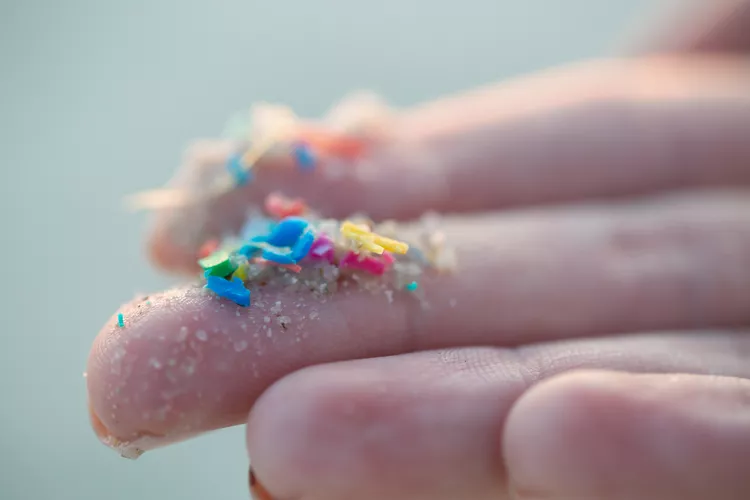
Microplastics can be found everywhere, from cosmetics to food to textiles.
Environmental Protection Agency. Microplastics research.
And now, a new study found that airborne consumption of these tiny particles of plastic could be causing significant harm to human health.
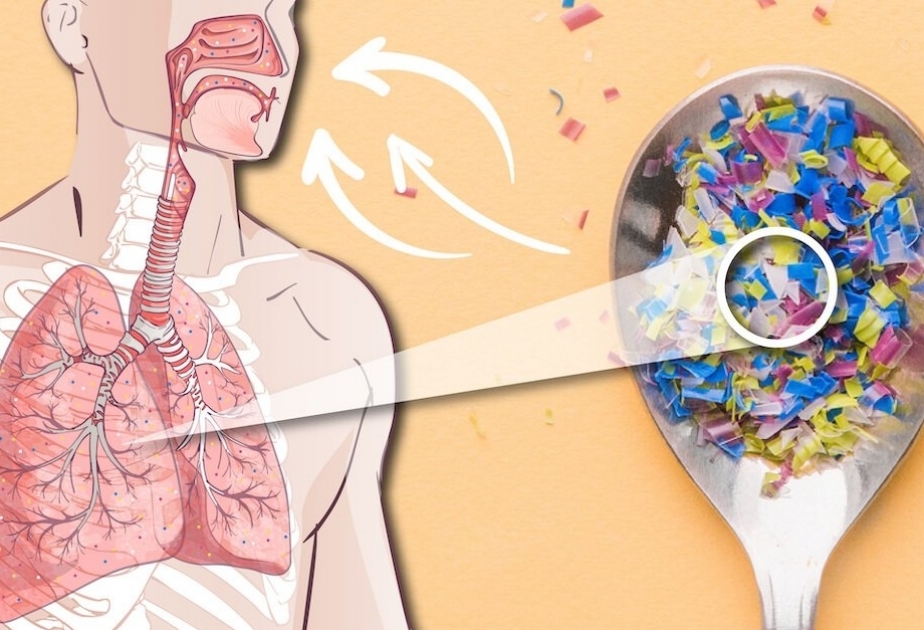
The new review of nearly 3,000 studies—published last month in Environmental Science & Technology—offers a comprehensive and troubling snapshot of how these microplastics are impacting digestive, reproductive, and respiratory health.
Specifically, the study’s authors found that there was a suspected link between breathing in microplastics and colon cancer, fertility issues for both men and women, and worsening lung function, raising the risk of lung cancer.
Microplastics are tiny plastic particles that range in size from a pencil eraser (5 millimeters) to just one nanometer (a human hair is 80,000 nanometers wide, for scale), according to the U.S. Environmental Protection Agency (EPA).
These harmful materials are generated by the almost 460 million metric tons of plastic the world produces annually—that number is expected to almost triple by 2060.
This research is a sobering wakeup call, said lead study author Nicholas Chartres, PhD, senior research fellow at the University of Sydney and collaborator at the University of California, San Francisco’s Program on Reproductive Health and the Environment.
There has been a surge of new research on the impacts of microplastics on human health in recent years, and this review essentially “makes sense of it all,” he said.
“We understand there are digestive, respiratory, and reproductive effects [from microplastics],” Chartres told Health. “When we inhale, or consume seafood, or drink water, these microplastics enter our body, our respiratory system, our digestive tract.”
Evidence of Microplastics Harming Health
This new review expands upon a report Chartres and his colleagues contributed to last year that documented the known health effects of microplastics and urged California lawmakers to explore further legislation to protect people from microplastic exposure.
Chartres and his colleagues looked at nearly 3,000 recently published studies that made claims about microplastics’ impact on health.
They took into account each study’s quality of evidence and the overall strength of their findings. A majority of the studies included in the review were done in animals.
Based on the quality of each study, the authors classified connections between airborne microplastic exposure and certain health issues as either “known,” “presumed,” “suspected,” or “not classifiable.”
In the end, they concluded that microplastics are “suspected” of causing harm to people’s reproductive, digestive, and respiratory health. They also noted a likely connection to colon cancer.
Though most of the studies were done in animals—particularly rodents—Chartres explained that the findings are still applicable to people, given that humans and animals are both subject to similar exposures, he said.
A large-scale review of this kind is relatively novel, and the findings highlight “the fact that there is some type of almost ubiquitous impact on our health from these [microplastics],” said Mary Johnson, MD, PhD, a research scientist in the department of environmental health at Harvard T.H. Chan School of Public Health.
“We are just at the tip of the iceberg” in our understanding of how wide-ranging these negative health effects might be, Johnson told Health.
How Do You Become Exposed to Microplastics?
Given how small and common these materials are, it’s not always easy to measure a person’s exposure to microplastics and the varying chemicals that can accompany them, Johnson said.
“Microplastics contain not only plastic polymer itself, but also chemicals that have been added to the plastics,” she explained. “Those probably change the toxicity and the exposure level, but we just are not far enough along in the research to be able to draw conclusions.”
Though measuring exact quantities can be challenging, experts agree microplastics are all around us. They’re used intentionally in cosmetics, packaging, tires, paint, synthetic fabric, and more, but have also been found in human tissue, food, beverages, and the air.
For the purpose of the new review, the authors focused on these airborne particles. Because the particles are airborne, these microplastics are found “in the most remote locations in the world,” Chartres said.
There are a number of ways that these tiny pieces of plastic can become airborne, including from sea spray, textiles sitting in landfills interacting with the wind, degrading tires as people drive, and more.
Wildfire smoke is another common way people breathe in microplastics, Johnson said. As fires tear through towns with modern, pre-fabricated homes, they incinerate and proliferate microplastics into the air.
There are other avenues of exposure, too.
Microplastics are plentiful in our oceans and waterways, contaminating the fish and seafood we consume, said Johnson. We can even come into contact with these particles via skin absorption, she added, though this the least common exposure method.
Are Some People More At Risk Than Others?
Due to the ubiquity of microplastics, all people are at risk, Chartres stressed. Microplastics travel by air, by water, through our food—they’re impossible to avoid.
These materials also “bioaccumulate” once they enter a person’s body, clumping up in tissue and remaining there as time goes on, he said. The amount of microplastics in a person’s body increases the longer they’re exposed.
That being said, certain factors could impact who’s most impacted by microplastic exposure. Some people who are living with various other conditions could be more prone to pulmonary issues or various cancers, for example.
Similarly, social determinants of health can come into play. People with a lower socioeconomic status, those in low- and middle-income countries, and people with certain professions may be more likely to be exposed to airborne pollution or may be more likely to consume foods packaged in plastic, said Chartres. They could see higher exposure levels.
“Socioeconomic factors such as poverty can contribute to greater stresses on the body. They can exacerbate the harms of chemical exposure,” he said. “People who experience multiple extrinsic and intrinsic stresses may have greater harm from exposures to the body [from microplastics].”
Protecting Yourself from Microplastic Exposure
Unfortunately, avoiding microplastics isn’t an easy task. And it’s a difficult conversation to have, said Chartres.
Long-standing damage is done—these materials can’t be removed from our atmosphere, oceans, or soil, and so much of the American food system relies on plastic packaging.
That being said, people can monitor their food sources and try to eat “as much fresh produce as possible,” he recommended.
This review and others like it should be a warning for both regulatory bodies and everyday people, said Chartres.
“We are seeing triple the predicted plastic production in the next 30 years—all that degraded plastics in the environment will be exposed in our air, food, and water,” he explained.
For the average consumer, it’s important to “be more aware of what they are purchasing,” said Johnson.
“One good example is synthetic clothing—I wouldn’t have thought twice about buying synthetic versus cotton earlier,” she said.
“The most important part is getting people engaged to really ask questions, regardless of where you are in the world,” Chartres added.
Governmental action and larger structural changes are also key.
“Ban the use of plastics for nonessential use is one way [to reduce microplastic exposure’],” said Chartres. “Demand that governments examine the data from these studies to [inform] sufficient regulations is another.”
Another avenue, Johnson said, could be legislation that makes non-synthetic textiles and products more affordable and accessible to consumers.
We can’t “turn the tap off” when it comes to plastic production, but the “overwhelming message, globally, is that there is the ability to take timely action now,” said Chartres.
“Successful regulation of industries like tobacco shows that governments will respond when it comes to the relationship between products and chemicals,” he said. “If we don’t respond to this, the consequences in the next 20 to 30 years [are] going to be devastating.”